
Monroe County Former Owner Chain
Monroe County puts many historical land instruments online. But the search key shifts with the era of the record. A newer deed often cites the volume, page, or document number of an earlier transfer. That citation becomes your way in. The county describes remote image retrieval for documents recorded after 1935. It also acknowledges a legal-description indexing gap before 1967. No single full list of surviving deed-book years is published. What the table documents reflects those two points, nothing more. The absence of a complete inventory should not be mistaken for missing deeds.
| Source | Years It Covers | Where Held | What It Shows |
|---|---|---|---|
| Deed images by reference | After 1935 by volume, page, or document number. | Tapestry, Laredo, or Register of Deeds terminal. | Recorded transfers and instrument details. |
| Legal-description index | Descriptions are not indexed before 1967. | Register of Deeds search tools. | Pre-cutoff search needs names or cited references. |
| County plat books | 1877, 1897, and 1915 books are listed. | Local History Room finding aids. | Earlier lot, farm, and map context. |
| Newspapers and directories | Runs begin in the nineteenth century; specific years vary. | Local History Room / regional library. | Name, street, estate, and community clues. |
A recent transfer starts with the current deed. Search its grantee as a grantor, then keep going. For older ownership, copy any cited book and page and use that reference to reach the prior image. When a parcel changed shape, compare the plat and CSM wording. A person or street clue outside the online index can lead to the Local History Room, where newspapers, directories, early court indexes, cemetery cards, and plat books add context. None of those sources replaces the deed itself. Treat each link in the chain as its own step: who conveyed, who received, when the document was recorded, and which description it covers. Names appear in multiple capacities. Spellings vary. An apparent break may simply be an indexing variation rather than a missing transfer. Compare the description and any cited prior instrument before concluding the chain has crossed into another parcel.
Find a Monroe County Chain Backward
Start with the current deed, not a speculative old name. Note its date, instrument number, grantor, grantee, and legal description. Then search that grantee as a grantor in the preceding transfer. Repeat the process, step by step. Each link should point to the same land. The parcel ID or street address may change over time. The sequence is a research method, not a title opinion. A tax deed, estate conveyance, foreclosure, trust transfer, correction, or CSM can intervene. Such events can make the chain look unlike a series of ordinary sales. Keep all instrument references and flag any gaps for a title professional. The party and document fields are the ones used in the online index. The Tapestry land-record search provides them.
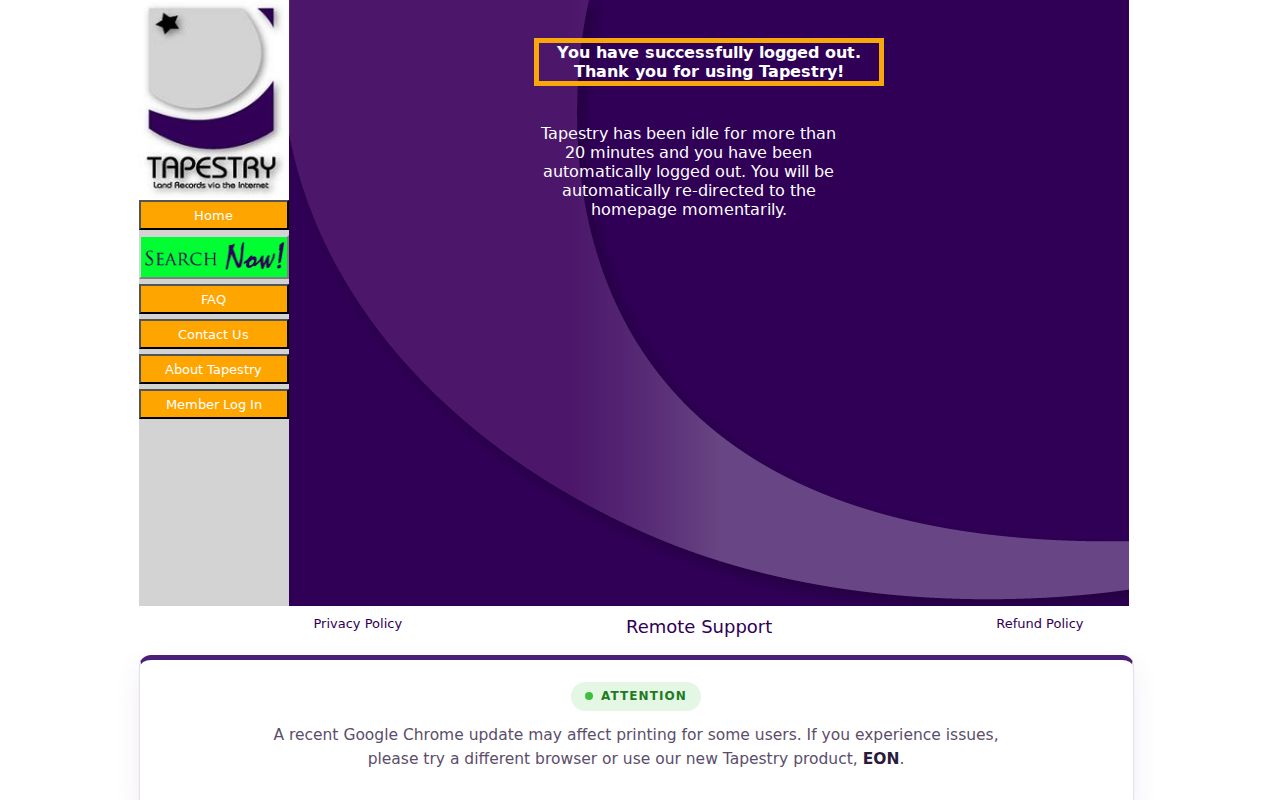
An older record missing from a parcel search is not a dead end. Use a later deed's cited volume-page reference, or ask at the county terminal.
Read the Monroe County Deed Chain
A grantor conveys an interest; a grantee receives it. The chain of title is the ordered sequence of instruments affecting a parcel. A legal description ties those instruments together more reliably than a street address, since road names, house numbers, and parcel IDs can all change. Record the party roles and instrument key for every transfer. Search both name variants and entity wording. If an older description never appears in the index, find a later deed citing book and page, then compare the source image with the current parcel's plat or CSM. Farm tracts raise their own quirks. An early instrument may identify land by section, township, range, quarter, road, or adjoining owner rather than any street number. Keep that older description in your notes even after a new parcel ID appears. The county's pre-1967 legal-description indexing gap makes these citations especially valuable for locating the original transfer.
- Find the newest deed and note the grantee, grantor, date, and document reference.
- Search the grantee as a grantor to find the prior conveyance.
- Read its grantor and legal description, then repeat with that prior party.
- When a parcel or name no longer matches, check a CSM, estate, tax deed, or court record.
- Grantor / grantee
- Parties who transfer and receive the stated interest.
- Chain of title
- The ordered record of instruments affecting the parcel.
- Legal description
- The written land description carried in the instrument.
- Book and page
- A volume location that can retrieve an older image.
- CSM
- A certified survey map documenting a parcel division or change.
Monroe County Deed Index Years
The Register of Deeds states that documents recorded after 1935 may be retrieved remotely. Retrieval works by volume, page, or document number. Images in Deeds, Misc, and Tax Deeds volumes are available online. Probate volumes can be searched by volume and page. Legal descriptions, though, are not indexed for documents recorded before 1967. That is a limit on search mechanics, not proof that older deeds do not exist. An online image may still be reachable through a later citation. A current parcel search cannot always locate it on its own. Use the name index, a cited reference, the plat or CSM, or the public terminal. Staff retrieval is another option. The office performs no title examinations. Plan accordingly.
Follow the citation. A volume and page on a later deed can bridge an older Monroe County transfer beyond the parcel-description index.
Monroe County Plats and Parcel Changes
A chain can appear to stop when a parcel is split, combined, annexed, or renamed. Preserve the parent and child legal descriptions. Keep the CSM number, lot and block, and the STR too. The Register of Deeds records plats and CSMs. LIO and the county surveyor supply map and survey files. These can help connect the descriptions. For Sparta or Tomah records near an annexation edge, check the county surveyor's folders. Look under both the city and the township section. Historical plat books listed for 1877, 1897, and 1915 show earlier lot and farm patterns. They offer geographic context only. The recorded deed and survey still establish the instrument trail.
Monroe County Probate Transfers
A former owner does not always leave a Monroe County parcel through a sale. Sometimes the land moves through probate. A personal-representative deed, a transfer-on-death instrument, a survivorship filing, a trust, or a later deed by heirs can each carry the title forward. Wisconsin Circuit Court Access lets you find a case by party name or case number. The Register of Deeds then confirms the recorded transfer itself.
Vital certificates are restricted under Wisconsin law, so do not expect open access. The state Vital Records page spells out who qualifies and how to order. Probate files and recorded transfer instruments remain public, and they often supply the property link you need. An obituary, a family reference, or a case summary is never proof of title.
One owner's death does not tell you who received the Monroe County land. Trace the probate or estate instrument into the deed index. See whether a personal representative, a surviving co-owner, a trust, or a later grantee is named as owner of record. The county's probate-volume search runs by volume and page. The Wisconsin Vital Records request page sets out the separate rules for certificate access.
Order an eligible vital record only when the chain truly requires it, then verify the property transfer in the Monroe County land records.
Monroe County History Room Sources
The Monroe County Local History Room and Museum sits in Sparta's former Masonic Temple. The address is 200 W. Main Street. Founded in 1976, it preserves county, municipal, and school records. Newspapers, directories, photographs, cemetery resources, vital-record indexes, and early court indexes are held there too. A name variant, a former road name, or a civic event found there can unlock a deed reference. The deed records alone do not reveal such things. Directories and newspapers also help separate people with similar names. They can tie a street to an old community label.
The regional Monroe County finding aid lists plat books, cemetery cards, city directories, newspapers, census materials, and early court records. Treat the archive as a research aid, not a land-record custodian. Every clue should send you back to the county instrument that actually describes the parcel.
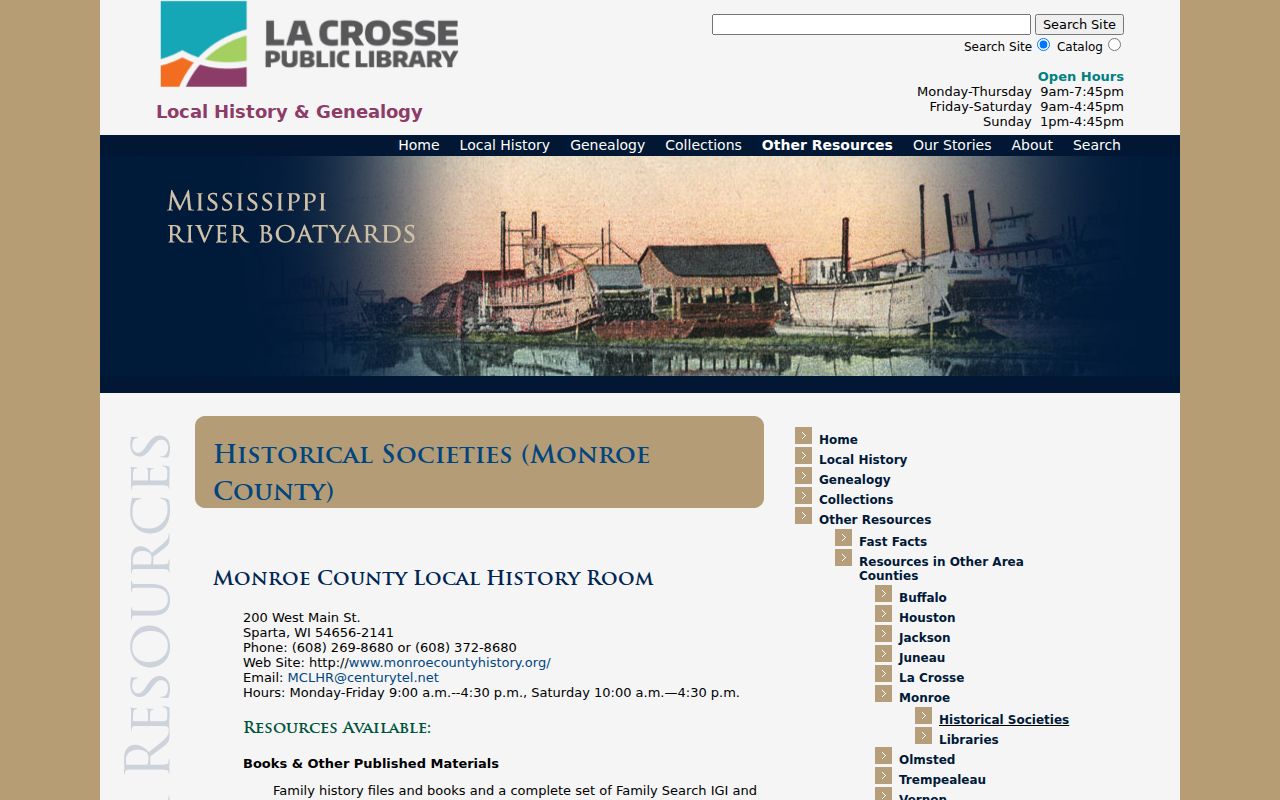
The finding aid, for instance, lists Monroe County plat books from 1877, 1897, and 1915. Use them to frame a parcel's earlier geography, then return to the deed image itself.
Monroe County Former Owner Limits
No single earliest deed-book year anchors the Monroe County chain. No courthouse loss redefines it. Do not invent a start date. Work from the later instrument citation, the online image reference, the public terminal, county survey files, and archive finding aids. Go only as far back as the records support.
Former-owner research serves house history, a property purchase, estate work, and a title question. It should never be used to track or target a living person. For legal reliance, ask a title professional. Have that person review the complete record chain and resolve any gap.
Lawful use. Use Monroe County former-owner records for property history and lawful diligence. Do not use names, addresses, or records to stalk, harass, threaten, or harm anyone.